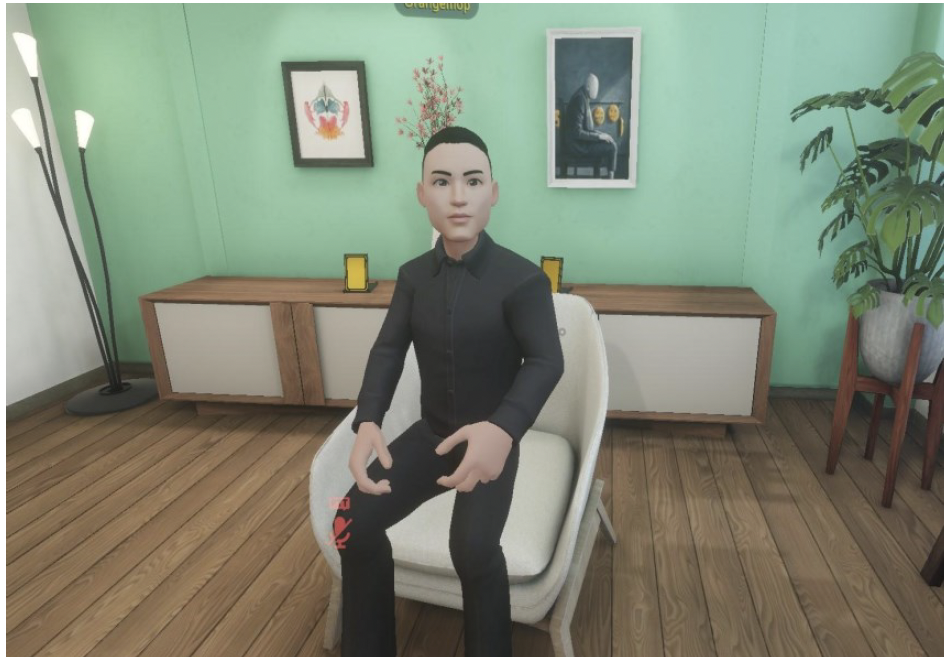
IMMERSIVE UX RESEARCH / 2022–2024 / Carleton University How avatar design shapes comfort and self-disclosure.
Studying the relationship between anthropomorphism, trust and disclosure in therapeutic VR interactions.
DESIGN ARTIFACT / WORKFLOW MODEL01
Prototype human-like and abstract avatars
02
Run controlled VR interactions and surveys
03
Compare comfort and disclosure patterns
01 / CONTEXTThe project at a glance
MY ROLEUX Researcher · VR environment design, avatar prototyping, surveys, behavioral analysis
COLLABORATORS & TOOLSCarleton University research collaborators and study participants
Rstudio · FIGMA · LateX · Unity · Blender · Excel
02 / CHALLENGEThe problem behind the interface
THE PROBLEMIn virtual therapeutic interactions, the appearance of an avatar can change how people feel about sharing sensitive information. More realism is not necessarily better for every person or task.
WHY IT MATTERSA design choice that looks aesthetic can influence comfort, attention and willingness to disclose information.
03 / PROCESSHow I approached it
01
FRAME THE QUESTION
Defined avatar anthropomorphism and self-disclosure as interaction variables.
02
DESIGN
Designed immersive environments, avatars and study flows to explore different presentation styles.
03
EVALUATE
Combined participant feedback and observed interaction patterns to interpret disclosure and comfort.
04 / DESIGN JUDGMENTThe decisions and their rationale
DECISION 01Treat avatar appearance as interaction design
WHAT I DIDCompared different levels of human likeness rather than choosing a visual style based on aesthetics.
WHY IT HELPEDMakes an implicit social cue visible as a testable UX variable.
DECISION 02Feedback without unnecessary interruption
WHAT I DIDUsed perception surveys and disclosure analysis rather than a single satisfaction score.
WHY IT HELPEDHelps avoid equating reported comfort with meaningful engagement or disclosure.
05 / OUTCOMEOutcome, evidence and limitations
89%
User comfort
Was identified for the humanoid avatars while certain nuances were better read by the other designs
Human-like vs abstract
Comparison standards for designs in therapy
SCALINGExpanding to include nuanced designs and nuanced use-cases of therapy to build off of the foundation created here 06 / REFLECTIONhow avatar anthropomorphism influences comfort, trust, and self-disclosure in virtual reality. Further research with a broader participant group could help validate the findings and inform more inclusive therapeutic VR experiences.
What I would validate next