SPATIAL UX + AI / JUL–AUG 2025 / eXReality.aiDesigning spatial experiences within hardware constraints.
Turning headset limitations and fragmented AR patterns into usable interaction models, easy to read UIs and fast content retrieval.
DESIGN ARTIFACT / WORKFLOW MODEL01
Review four AR/XR experiences
02
Develop two end-to-end directions
03
Implement QR retrieval UI and refine
01 / CONTEXTThe project at a glance
MY ROLEAI & Design Consultant · UX strategy, competitive review, interaction design, prototyping
COLLABORATORS & TOOLSXR engineers and client stakeholders
UNITY · FIGMA · CURSOR · DOCKER · MCP integrations
02 / CHALLENGEThe problem behind the interface
THE PROBLEMAR experiences must balance navigation, feedback and spatial clarity with processing, thermal and battery limits that constrain what can happen in the headset.
WHY IT MATTERSA compelling interaction is not useful if it increases device load, delays retrieval or leaves people uncertain about system state.
03 / PROCESSHow I approached it
01
ANALYZE
Compared four AR/XR products, documenting friction in navigation, feedback and interaction consistency.
02
PROTOTYPE
Translated findings into reusable interaction principles and two design directions within one month.
03
DELIVER & ITERATE
Designed and implemented a QR-based content retrieval flow and a stakeholder-ready connectivity concept.
04 / DESIGN JUDGMENTThe decisions and their rationale
DECISION 01QR as a lightweight entry point
WHAT I DIDUsed a QR-driven retrieval pattern to connect a headset to content without requiring a dense spatial menu.
WHY IT HELPEDReduces interaction overhead while accounting for compute, heat and battery constraints.
DECISION 02Constrain the experience deliberately
WHAT I DIDPrioritized clear system feedback and compact information hierarchy over feature-heavy overlays.
WHY IT HELPEDSupports legibility and predictable behavior in immersive environments.
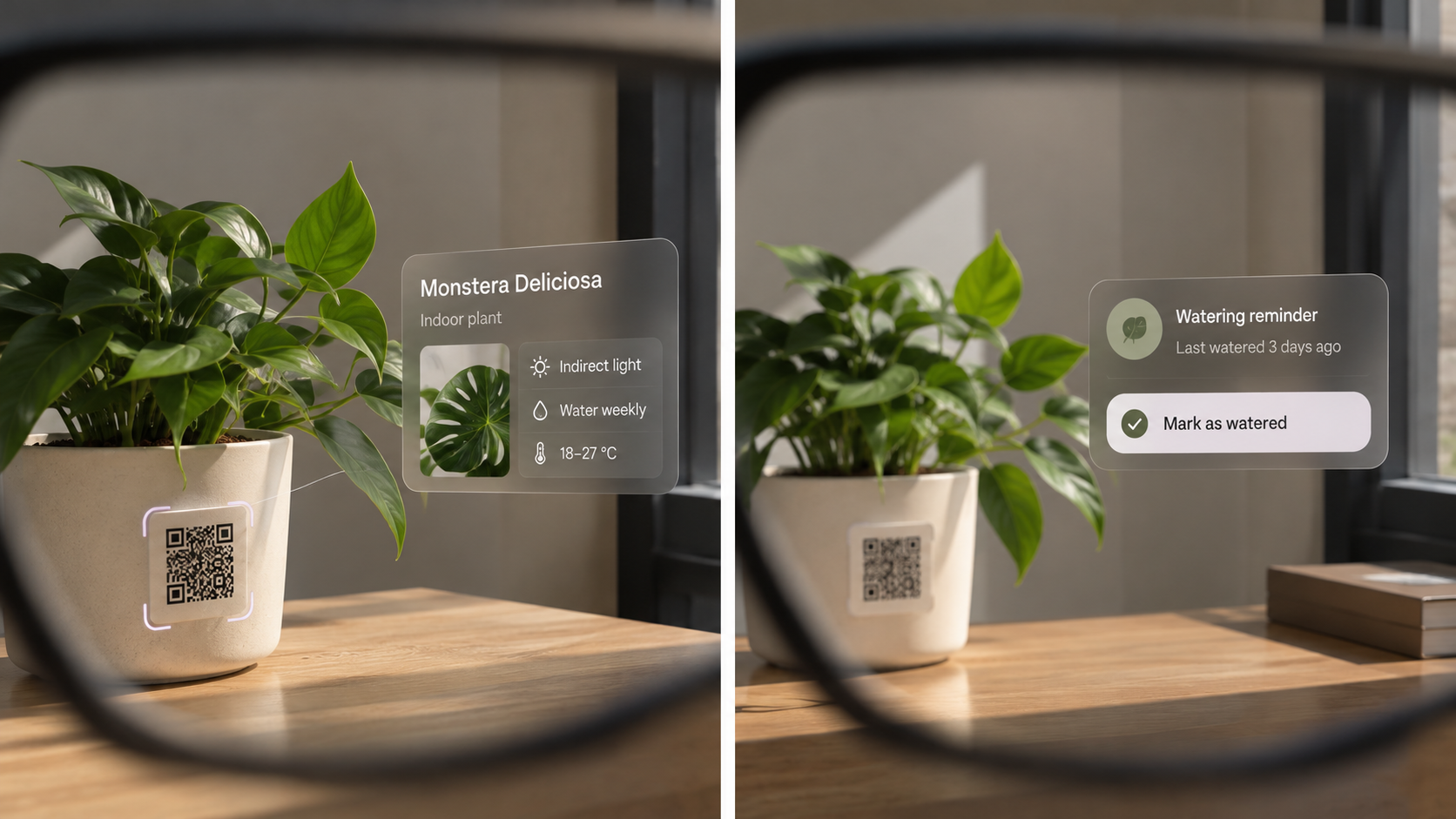
Visuals have been recreated for illustrative purposes. All identifying information and original interface elements have been altered or removed to comply with NDA restrictions while preserving the core UX concepts and design decisions.
05 / OUTCOMEOutcome, evidence and limitations
<1 second
Content retrieval response
Reported technical response for the QR-based flow; not evidence of faster task completion or improved usability.
2 design directions
Developed within one month
RAPID ITERATION & PROTYPING
SCALINGTechnical response time is not the same as a usability outcome. Next, test task completion, error recovery and comfort on target headsets.06 / REFLECTIONhow easily users access and interact with content in immersive environments. Usability testing could help assess information clarity, interaction efficiency, and comfort, while identifying opportunities to reduce cognitive load and improve spatial navigation.